Two Minutes. Once a Month. It Makes a Bigger Difference Than You Think.
— Drive Safe. Get the Power.
Tyre pressure is one of the easiest things you can check on your car — and one of the most overlooked. Most people only notice it when something goes wrong.
But here’s the thing: your tyres can lose pressure slowly over weeks without any obvious sign. No flat, no warning light, just a tyre running soft — and that quietly costs you in fuel, tyre life, and safety.
On New Zealand’s roads — chip seal, wet highways, winding back roads — the difference between correct and incorrect pressure is real. This guide covers everything you need to know, in plain English.
Why Tyre Pressure Matters
Your tyres are designed to operate within a specific pressure range. Too low or too high — and everything suffers. Here’s what happens in each case:
TOO LOW — UNDER-INFLATED
Longer braking distances — especially in the wet
Less grip and handling stability
Tyres overheat under load — risk of blowout
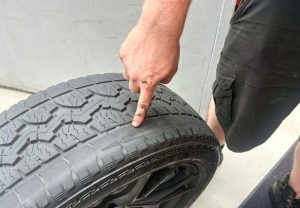
Faster, uneven tread wear
Higher fuel consumption
TOO HIGH —OVER-INFLATED
Smaller contact patch — less grip overall
Harsher, less comfortable ride
Centre tread wears out faster
More vulnerable to pothole and kerb damage
Unpredictable handling
.
Did you know?
Most drivers lose between 10–50% of their tyre's tread life simply by running at the wrong pressure. That's a lot of money and rubber going to waste.
What Tyre Pressure Should My Car Have?
There’s no single correct pressure for all vehicles — it depends on your specific car, tyres, and how it carries weight.
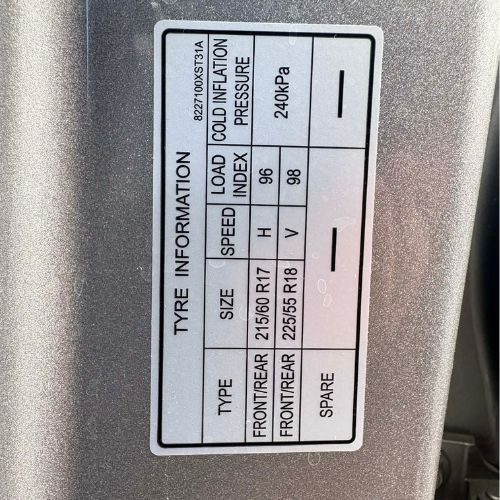
Your vehicle manufacturer sets the right pressure. You’ll find it in one of three places:
Driver's door jamb
The most common spot — look for a sticker inside the door frame when you open the driver's door.
Owner's manual
The most common spot — look for a sticker inside the door frame when you open the driver's door.
Fuel flap
Some vehicles print it here — worth a quick check.
In New Zealand, pressure is shown in kPa (kilopascals) or PSI. Most family cars sit between 190–240 kPa (28–35 PSI) — but always use the number for your vehicle, not a general estimate.
.
Always check cold.
Driving heats the air inside your tyres, which increases the pressure reading. Check before your first trip of the day — or after the car has been parked for at least an hour. If you've already driven somewhere to get air, note the reading before you left, and adjust accordingly at the pump.
Not sure what pressure your tyres need?
Pop into any Tyrepower store — we’ll check it for free. No booking required.
You don’t need to be a mechanic. You need a decent gauge and about two minutes.
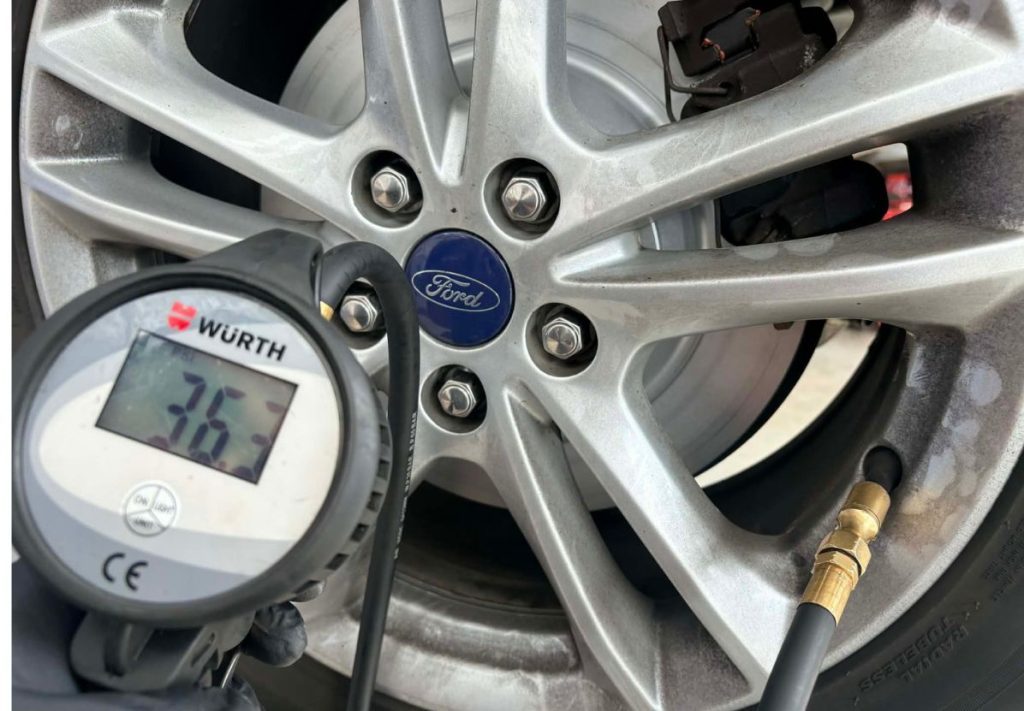
One thing worth knowing: don’t rely on service station gauges. They take a beating and are often out of calibration. A digital gauge costs under $30 and will serve you well for years.
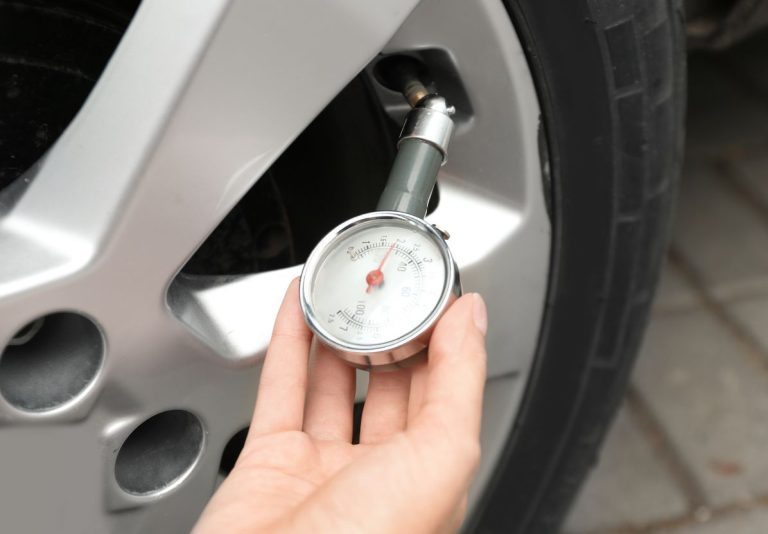
Methods One - Use a Tyre Pressure Gauge at Home
Park on flat ground — tyres need to be cold before you check.
Remove the valve cap from the tyre stem and keep it safe.
Press the gauge firmly onto the valve. A brief hiss is normal.
Read the pressure and compare to your door placard.
Add or release air until you hit the right number.
Replace the valve cap — it keeps out moisture and dirt.
Check all four tyres, and don’t forget the spare
Which Type of Gauge Is Most Accurate?
TYPE
Digital gauge
ACCURACY
Best
NOTES
Easy to read, works in low light — our recommendation
Dial (analogue)
Good
Reliable if kept clean and undamaged
Pencil / stick
Basic
Better than guessing, but less precise
Service Station
Unreliable
Often poorly maintained — use your own if possible
Which Type of Gauge Is Most Accurate?
TYPE
Digital gauge
Best
Easy to read, works in low light — our recommendation
TYPE
Dial (analogue)
Best
Easy to read, works in low light — our recommendation
Good
Reliable if kept clean and undamaged
TYPE
Dial (analogue)
Good
Reliable if kept clean and undamaged
TYPE
Dial (analogue)
Best
Easy to read, works in low light — our recommendation
Good
Reliable if kept clean and undamaged
TYPE
Pencil / Stick
Basic
Better than guessing, but less precise
TYPE
Dial (analogue)
Best
Easy to read, works in low light — our recommendation
Good
Reliable if kept clean and undamaged
TYPE
Service Station
Unreliable
Better than guessing, but less precise
Good
Reliable if kept clean and undamaged
.
Space-saver spare?
These often require a much higher pressure than your road tyres — sometimes 420 kPa or more. Check the spare's placard or your owner's manual. An under-inflated space-saver is virtually useless.
Method 2 - Get a FREE Check at Your Local Tyrepower Store
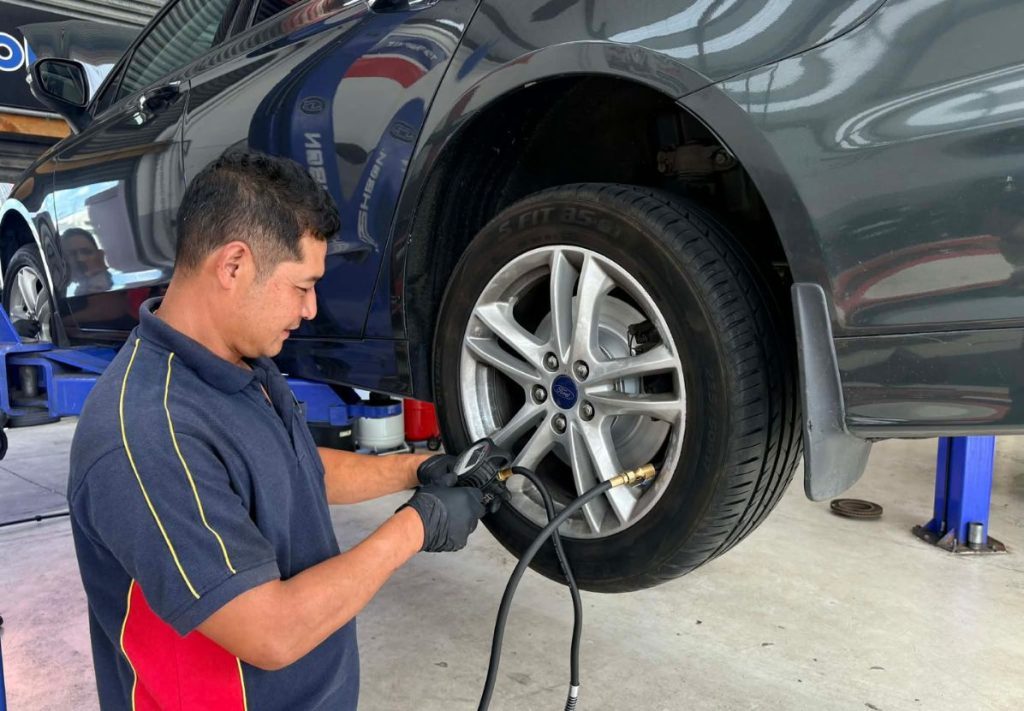
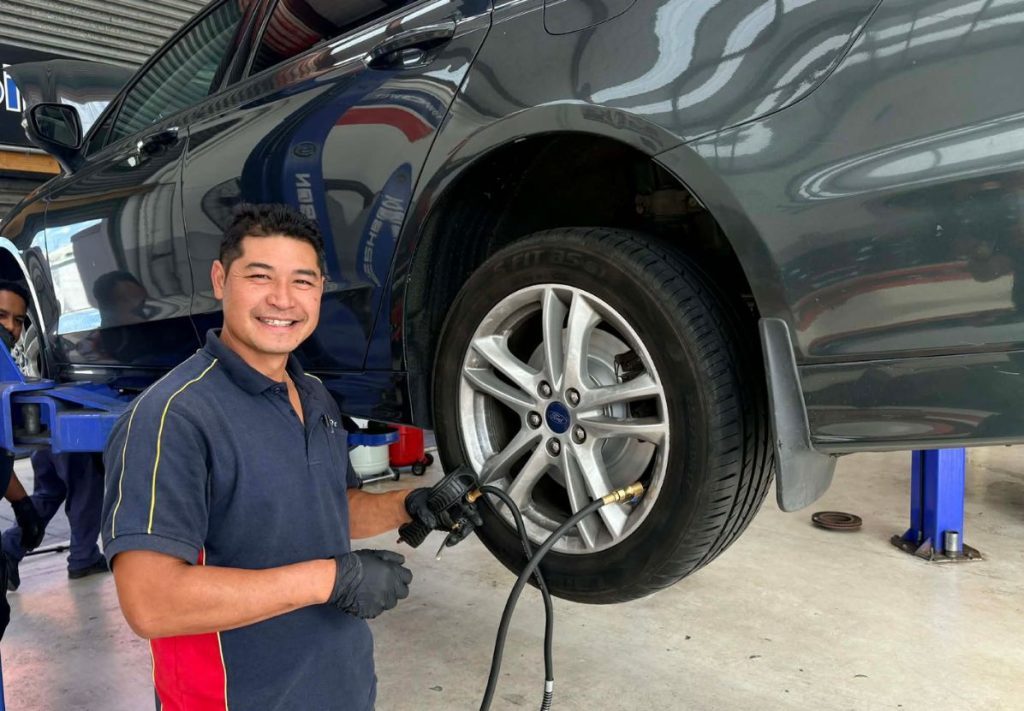
All Tyrepower stores nationwide offer free tyre pressure checks — using calibrated professional equipment. While we’re at it, we’ll also check:
Tread depth — and flag if you’re approaching the legal 1.5mm minimum
Uneven wear patterns — which can point to alignment or mechanical issues
Tyre age and sidewall condition
Valve condition — a worn valve is a common cause of slow pressure loss
Whether a rotation is due
Get a free tyre pressure check at Tyrepower
We’ll check all four tyres, inspect tread, and give you an honest assessment.
Even without a puncture, tyres lose air through normal permeation. In cooler NZ conditions, a tyre can lose 1–2 kPa per month. In summer or direct sunlight, it’s more.
A tyre that was fine in June can be noticeably soft by August — without anything going wrong.
Check your tyre pressure:
Once a Month - Minimum
Before any long road trip
When carrying heavy loads or towing
When the seasons change significantly
Every time your tyres are rotated
.
Easy habit to build
Check your tyre pressure every second time you fill up with petrol. It takes two minutes and costs nothing — and it means you'll never be more than a few weeks overdue.
Temperature affects pressure more than most people realise. For every 10°C change, tyre pressure shifts by around 7 kPa. That’s enough to take you from correctly inflated to under-inflated as New Zealand heads into winter.
Adjusting Tyre Pressure for Different Load Conditions
Heading away for the holidays? Towing a boat or trailer? Your tyres need more support when you’re carrying more weight.
Your door placard usually shows two sets of pressures: one for normal load, and one for maximum load. When you’ve got extra passengers, luggage, or a trailer on the back, increase to the higher figure.
This is especially important for utes, SUVs, and 4WDs — vehicles that get loaded very differently from one trip to the next.
.
Off-roading or beach driving?
Many 4WD drivers deliberately lower tyre pressure (airing down) for sand or mud — that's fine and it works. Just make sure you re-inflate to road pressures before heading back onto the highway. Driving at motorway speeds on heavily under-inflated tyres is genuinely dangerous and can cause rapid tyre failure.
Not sure what pressure suits your specific load? Pop in and ask — our team deals with this every day.
Warning Signs Your Tyre Pressure Is Off
The sneakiest problem is a slow leak — a small nail or screw acting as a plug, with pressure dropping quietly over days. Your best defence is knowing what to look for.
Watch out for:
Vehicle pulling or drifting to one side
Vibration through the steering wheel or floor
A ticking or flapping sound — especially noticeable at slow speeds in car parks
One tyre that looks or sits differently to the others
A bulging or distorted sidewall
One tyre noticeably hotter than the rest after driving
Your TPMS dashboard warning light activating
.
What to do if you suspect a slow leak
Pull over safely, inspect the tyre, and fit your spare if needed. When you bring it in, ask us to check for sidewall damage — a powdery residue inside the tyre means internal damage and the tyre will need replacing, not just patching.
TPMS and Electric Vehicles
Most vehicles made from around 2012 onwards have a Tyre Pressure Monitoring System (TPMS). It’s useful — but it’s a safety net, not a routine check.
TPMS alerts you when a tyre drops 25% or more below the recommended pressure. By that point, you’re already well under-inflated. Think of the warning light as a last resort, not a substitute for monthly checks.
.
Good To Know
TPMS sensors have batteries that typically last 5–10 years. After inflating tyres, you may need to reset the system — your owner's manual will explain how. If the light stays on after inflating, mention it when you come in.
Electric Vehicles and Tyre Pressure
EVs are heavier than equivalent petrol cars — the battery adds significant weight — and their instant torque is harder on tyres. That makes correct tyre pressure even more important for EV owners, both for safety and to protect your range.
Most modern EVs sold in New Zealand come with TPMS as standard. If you’re running an EV or thinking about EV-specific tyres, we can help you find the right setup and pressures for your vehicle.
Driving an EV? We stock EV-compatible tyres.
Talk to your local Tyrepower team about the right tyres and pressures for your vehicle.
For more, visit our Tyre FAQs page — but here are the questions we hear most often at our stores
What is the recommended tyre pressure for a typical family car in New Zealand?
Why Tyre Pressure Matters
Your tyres are designed to operate within a specific pressure range. Too low or too high — and everything suffers. Here’s what happens in each case:
Most passenger cars run between 190–240 kPa (28–35 PSI), but your exact figure depends on your make, model, and tyres. Check your driver’s door jamb placard — it’s the only number that matters for your vehicle.
How often should I check my vehicle's tyre pressure?
At least once a month, plus before long trips, heavy loads, or towing. A good habit: check every second time you fill up with petrol.
What are the signs of under-inflated tyres?
Vehicle pulling to one side, vibration in the steering wheel, a ticking or flapping sound at slow speeds, a visibly different-looking tyre, or your TPMS warning light. Higher fuel consumption and uneven tread wear are also common signs.
Where can I find the recommended tyre pressure for my car?
Start with the sticker on your driver’s door jamb — it’s there on most vehicles. Also check the owner’s manual or the fuel flap. If you can’t locate it, pop in and we’ll look it up for you.
How do I adjust tyre pressure for different load conditions?
Your door placard usually shows two pressures — one for normal loads, one for maximum load. Increase to the higher figure when carrying extra weight or towing. Ute and 4WD owners should check this regularly, as load varies significantly trip to trip.
What type of tyre pressure gauge is most accurate?
Digital gauges are the most accurate and easiest to read. Avoid relying on service station gauges — they’re often poorly maintained. For a guaranteed accurate reading, come into any Tyrepower store — our equipment is professionally calibrated.
Are there tyre pressure monitoring systems compatible with electric vehicles?
Yes — most modern EVs come with TPMS as standard. EV-specific tyres are built to handle the additional weight and torque of electric drivetrains. Talk to your Tyrepower team about the right setup for your vehicle.
Where can I inflate my car tyres near me?
Most petrol stations have air pumps. For a free, accurate check using calibrated equipment — plus a look at tread depth and overall tyre condition — visit your nearest Tyrepower store. No booking needed.
Related Guides
These guides work together — read one, bookmark them all.
Correct tyre pressure is one of the simplest things you can do for your car. Two minutes a month. That’s it.
If you’d rather leave it to us — or just want peace of mind — bring your vehicle into your nearest Tyrepower store. We’ll check your pressures, inspect your tread, and give you honest advice. No upsell, no pressure.